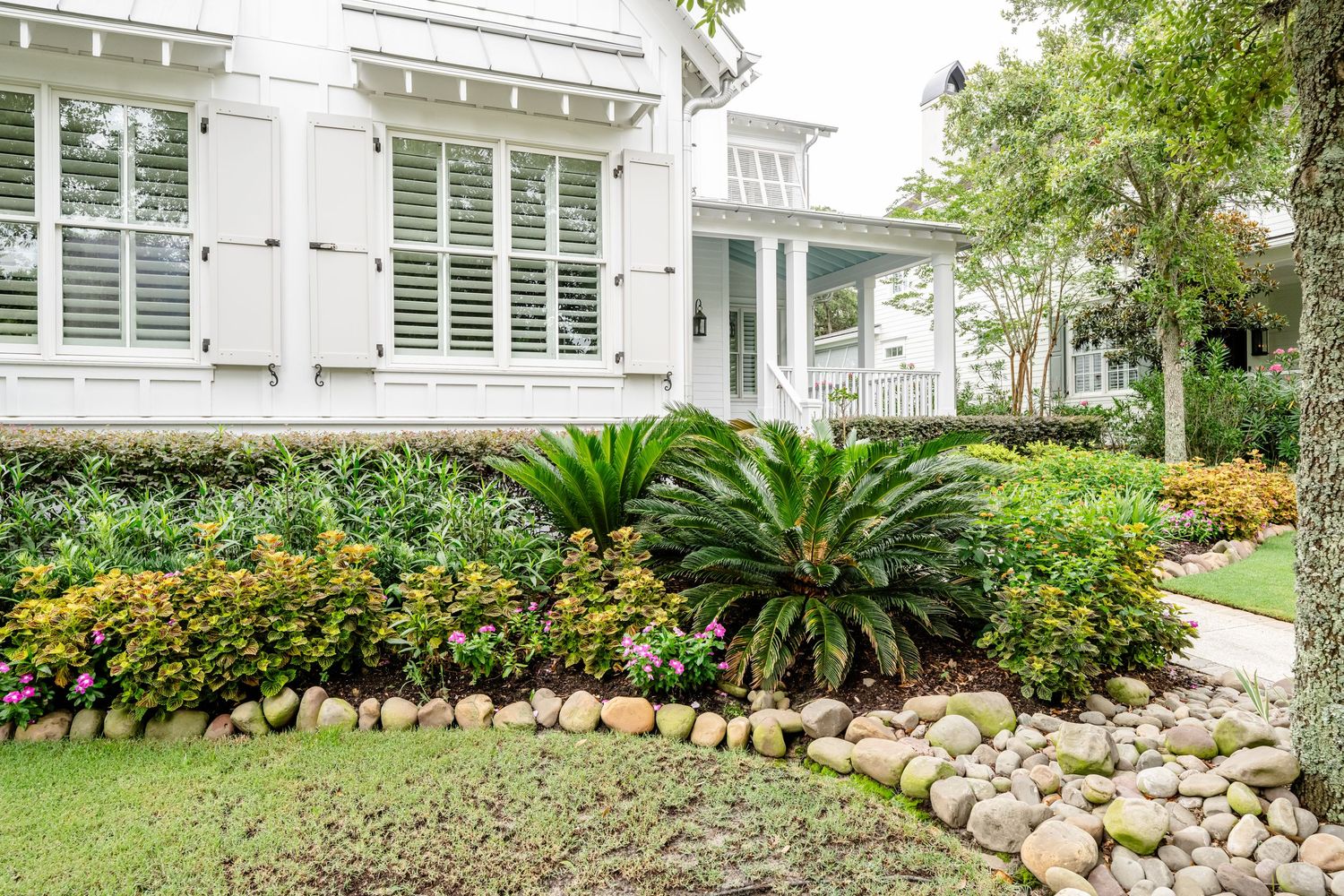
The Lowcountry — especially around Charleston — is one of the most ecologically rich regions in the Southeast. With its tidal marshes, maritime forests, sandy soils, and humid climate, this area supports an incredible web of life.
But as our region continues to grow, so does the pressure on local ecosystems. At Charleston Outdoor Design, we believe beautiful landscapes and healthy ecosystems are not opposites — they go hand in hand. The key is balance.
Why Native Plants Matter in the Charleston Area
Native plants are species that evolved here over thousands of years. They are uniquely adapted to our sandy soils, salt air, heat, humidity, and periodic flooding. More importantly, our wildlife evolved with them.
Here are five well-known native plants that thrive in the Lowcountry:
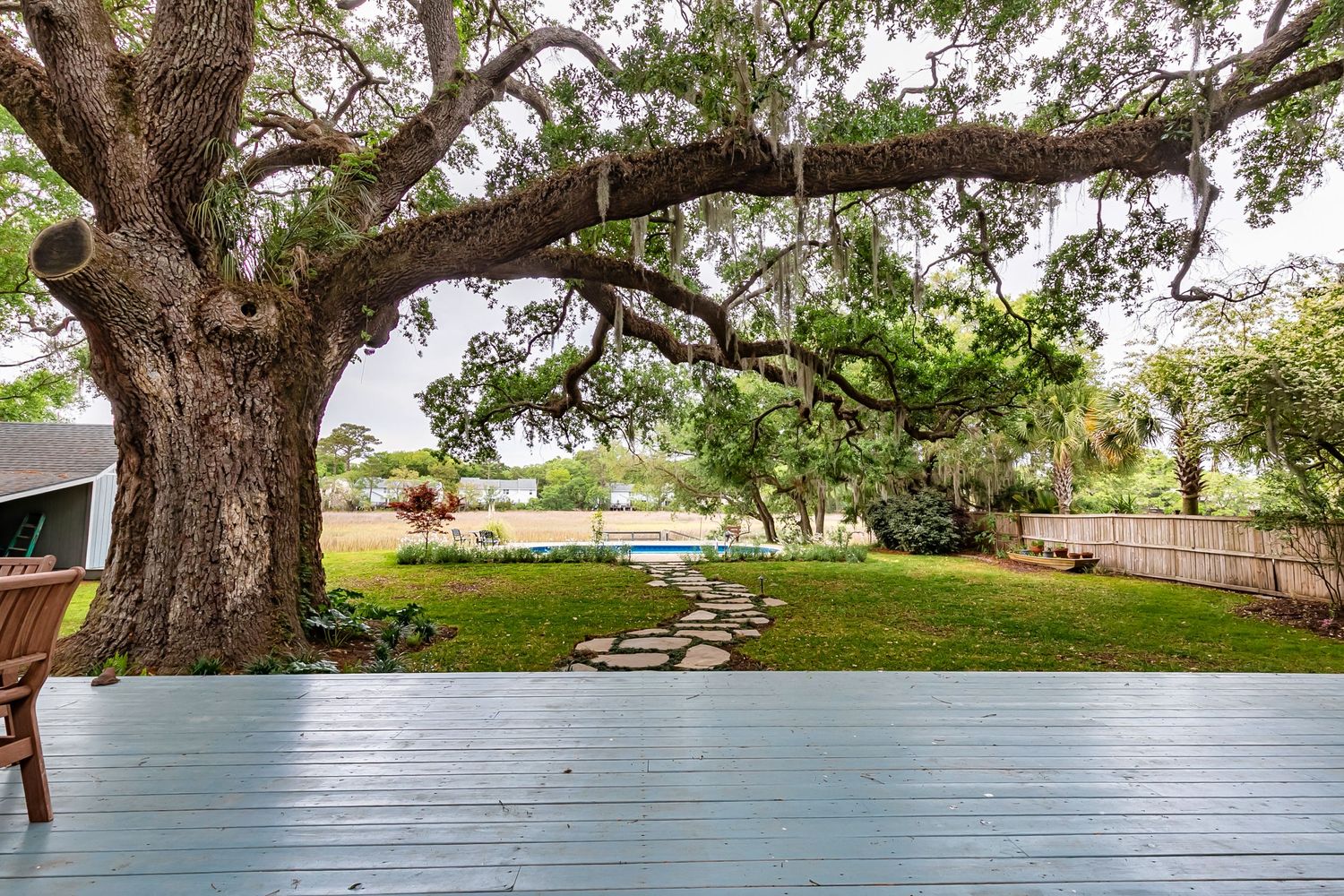
1. Live Oak (Quercus virginiana)
An iconic Southern tree with sprawling limbs and timeless beauty.
Benefits:
• Supports hundreds of species of caterpillars and insects (critical bird food)
• Provides nesting habitat for songbirds
• Offers cooling shade that reduces heat island effects
• Deep roots help stabilize soil
• Long lifespan supports ecosystems for generations
2. Southern Magnolia (Magnolia grandiflora)
A glossy evergreen with fragrant white blooms.
Benefits:
• Seeds feed birds and small mammals
• Dense foliage provides year-round shelter
• Attracts native pollinators
• Helps filter air pollutants
• Thrives in Lowcountry humidity without heavy chemical input
3. Yaupon Holly (Ilex vomitoria)
A versatile evergreen shrub or small tree with bright red berries.
Benefits:
• Berries are a winter food source for birds
• Extremely drought and salt tolerant
• Supports native insects
• Ideal for natural privacy screens
• Requires minimal fertilizer once established
4. Muhly Grass (Muhlenbergia capillaris) AKA "Sweetgrass"
Known for its stunning pink plumes in fall.
Benefits:
• Provides nesting material for birds
• Excellent erosion control
• Thrives in poor soils
• Low water needs
• Adds seasonal beauty without chemicals
5. Eastern Red Cedar (Juniperus virginiana)
A hardy evergreen native conifer.
Benefits:
• Produces berry-like cones eaten by cedar waxwings and other birds
• Provides critical winter shelter
• Highly drought tolerant
• Excellent windbreak
• Supports native insect life
The Bigger Picture: Birds in Decline
Since 1970, North America has lost nearly 3 billion birds — a staggering decline across grasslands, forests, wetlands, and even backyard species. Landmark research published in Science and led by scientists at institutions like Cornell Lab of Ornithology revealed that bird populations have dropped by almost 30%.
Why?:
• Overdevelopment
• Habitat destruction
• Wetland loss
• Pesticides and insecticides
• Decline in native plant communities
Here in the Charleston area, rapid growth has meant fewer natural habitats. But what many homeowners don’t realize is that backyard choices also play a role.
The Backyard Chemical Cycle
Many people move to the Lowcountry and quickly discover something we’ve always known: it’s buggy here. Mosquitoes, gnats, beetles, caterpillars — they’re part of the ecosystem.
Unfortunately, the instinct is often to eliminate them completely using chemical sprays and lawn treatments.
Here’s the unintended cycle:
1 Chemicals kill insects.
2 Birds lose a major food source (especially for feeding nestlings).
3 Bird populations decline.
4 Fewer birds means fewer natural predators for insects.
5 Bug populations rebound — often worse.
6 More spraying follows.
It becomes a self-perpetuating loop.
In reality, insects are not the enemy — they are foundational to the food web. A single clutch of baby birds may require thousands of caterpillars to fledge successfully.
How Pesticides Harm Birds — and Families
Pesticides don’t just disappear after application. They linger in soil, drift in the air, and wash into waterways.
Impact on Birds:
• Direct poisoning from eating contaminated insects or seeds
• Thinner eggshells and reduced reproduction
• Neurological damage
• Disruption of migratory patterns
Impact on Your Family:
• Residue tracked indoors
• Children exposed while playing barefoot
• Pets absorbing chemicals through paws
• Contaminated runoff entering local waterways
• Chemical drift affecting neighboring properties
In a humid, rainfall-heavy region like Charleston, chemicals move easily through our sandy soils and into marshes and tidal creeks — ecosystems that define the Lowcountry.
Why Balance Matters
This doesn’t mean every plant in your yard must be strictly native. A thoughtfully designed landscape can include non-native plants — as long as they are non-invasive and well-behaved in our ecosystem.
Non-invasive, non-native plants can:
• Add ornamental diversity
• Extend bloom times
• Provide aesthetic variety
• Complement native foundations
But native species should form the backbone of the landscape because they provide the greatest ecological return.
Our Comittment At Charleston Outdoor Design
At Charleston Outdoor Design, we believe:
• Native plants should be prioritized.
• Non-native plants must always be non-invasive.
• Chemical dependency is not sustainable.
• Beauty and ecological responsibility can coexist.
We use:
• Eco-friendly, organic fertilizers
• Organic and targeted pest management solutions
• Soil-building practices that strengthen plants naturally
• Designs that work with the Lowcountry environment — not against it.
Our goal is to create landscapes that are beautiful, functional, and supportive of the birds, pollinators, and wildlife that make Charleston special.
The Future of Charleston Landscapes
Every yard matters.
When we choose native plants, reduce chemicals, and design responsibly, we contribute to restoring balance in our community. We support bird populations. We protect wetlands. We safeguard our children and pets. And we preserve the unique ecological heritage of the Lowcountry.
If we want fewer pests, healthier ecosystems, and thriving bird populations, the answer isn’t more chemicals — it’s smarter planting.
And that starts right in your backyard.