Why Tree Planting Matters More Here Than Almost Anywhere Else
Charleston is growing—fast.
From the peninsula to Mount Pleasant, West Ashley to Johns Island, development is happening at a pace few other cities in the country are experiencing. New neighborhoods rise almost overnight. Roads widen. Lots are cleared. And more often than not, the trees go first.
Charleston has always been shaped by its landscape. Live oaks, palmettos, pines, and marsh edges aren’t just scenery—they define how this place feels, how it functions, and how livable it is. When development ignores that reality, the impacts are immediate and long-lasting.
Overdevelopment Hits Harder in the Lowcountry
What works in other cities doesn’t always work here. Charleston’s coastal climate, sandy soils, and flat terrain mean that removing trees has consequences that show up quickly.
Without trees:
• Heat intensifies on streets, homes, and job sites
• Stormwater moves faster, contributing to flooding in already vulnerable areas
• Soils degrade, making landscapes harder to establish and maintain
• Outdoor spaces become unusable for much of the year
In a place as hot, humid, and flood-prone as Charleston, trees aren’t optional—they’re infrastructure.
We Used to Build Around Trees. Now We Clear and Replant
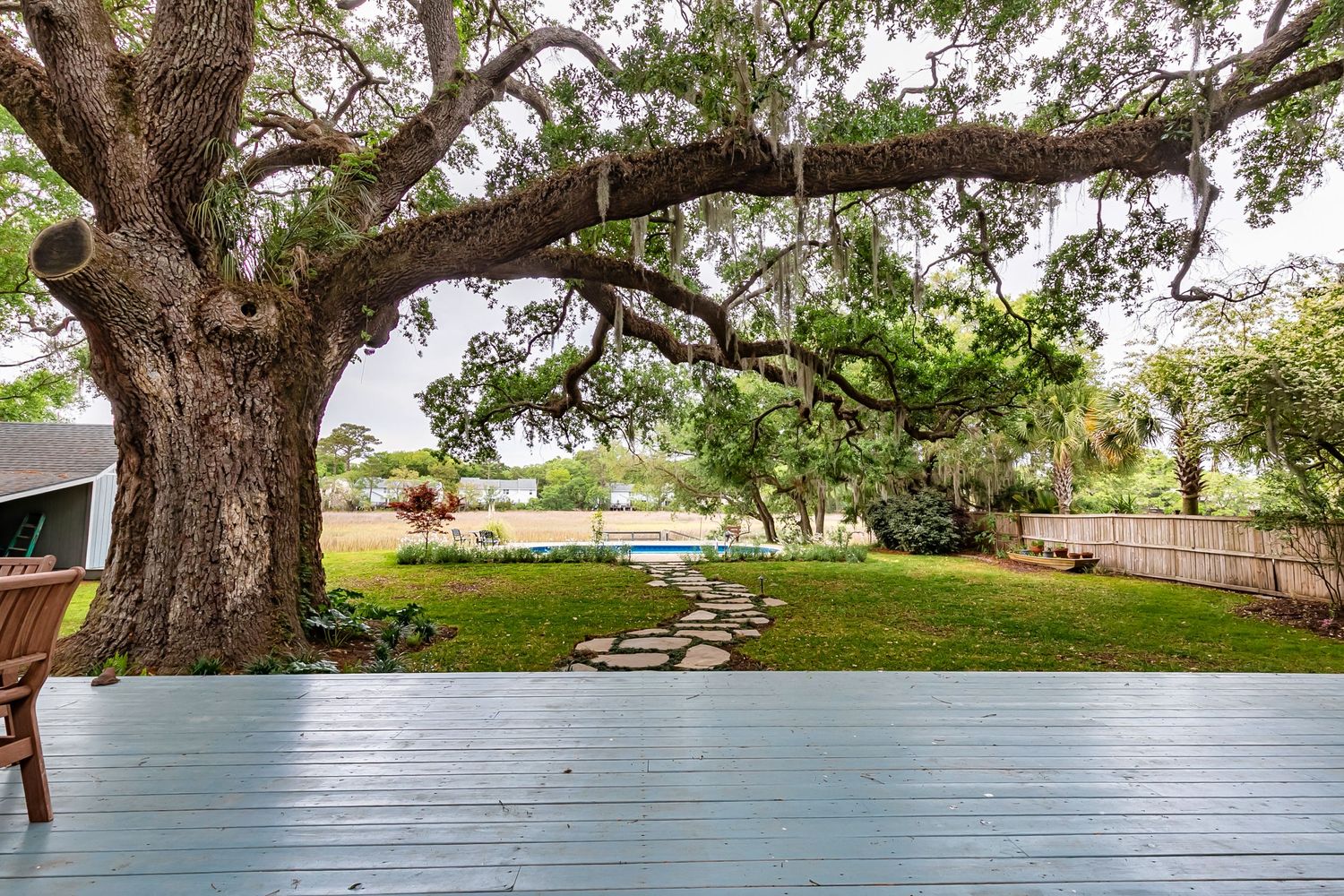
Charleston’s older neighborhoods tell a different story. Historic streets were designed around massive oaks that still provide shade generations later. These trees weren’t decorative—they were intentional.
Today, preservation doesn’t always happen. Sites are often cleared completely to make room for faster construction. When that happens, the responsibility shifts.
If trees can’t be saved, they must be replanted—and replanted well.
Planting Trees is a Good Thing
Tree planting isn’t about replacing what was lost overnight. It’s about restoring balance over time.
In Charleston, the right trees:
• Reduce surface temperatures and energy costs
• Slow and absorb stormwater during heavy rain events
• Stabilize sandy soils
• Improve air quality
• Increase property value and long-term usability
But success depends on doing it right—choosing species suited for coastal conditions, spacing them properly, and planning for canopy growth, not just day-one appearance.
Landscaping with Charlestons Future in Mind.
At Charleston Outdoor Design, we approach landscaping with a long view—one that respects how Charleston grows and what it needs to stay livable.
That means:
• Designing landscapes that work with heat, water, and soil
• Planning for shade ten, twenty, and thirty years out
• Treating trees as essential assets, not line items
• Creating outdoor spaces that people can actually use in August
Because in Charleston, landscaping isn’t just about looks. It’s about resilience.
Development Isn't The Enemy - Short Sighted Design Is
Growth is part of Charleston’s future. But growth without trees comes at a cost the Lowcountry can’t afford.
Planting trees is a good thing. Designing with the land is a smart thing. Building landscapes that give back is the responsible thing.
If Charleston is going to continue growing—and it will—then planting trees isn’t a gesture. It’s a necessity.